
New-collar jobs are positions that prioritize specialized technical skills and industry certifications over traditional four-year college degrees. These roles bridge the gap between white-collar and blue-collar work; they allow candidates to qualify for high-demand careers through vocational training, apprenticeships, or online credentials. As skills-based hiring becomes the standard in 2026, these certifications serve as the primary gateway to stable and well-paying employment.
The traditional path of four-year degrees and massive debt is failing to keep pace with the modern workforce; many talented professionals find themselves locked out of high-paying roles simply because they lack a specific credential. In 2026, the labor market has shifted its focus from where you went to school to what you can actually do. This transition toward new-collar jobs represents a massive opportunity for those willing to specialize in high-demand technical skills. This guide explores the new-collar revolution, detailing why skills-based hiring now dominates the market and which specific certifications hold the most value in the age of AI. You will learn about the top career paths available right here in Southern Utah and discover practical strategies to qualify for these lucrative positions without a traditional college degree.
Understanding the New-Collar Revolution in the 2026 Workforce

The landscape of the American workforce is undergoing a profound transformation. Historically, the labor market was defined by a rigid binary: blue-collar roles centered on manual labor and white-collar roles that required a four-year degree for office-based work. By 2026, technology has effectively dissolved these boundaries. This evolution has solidified the rise of new-collar jobs, which are roles that prioritize specialized technical skills and industry-recognized certifications over traditional academic history.
At the heart of this shift is the 70/30 rule in modern hiring. Employers are increasingly moving away from using a degree as a proxy for ability; instead, they are looking for a composition of 70 percent skills-based competency and 30 percent cultural or soft skill fit. This approach focuses on what a candidate can actually do on day one. For many in Southern Utah, this means that career-focused education and certification programs provide a faster, more direct route to high-paying stability than a general four-year degree ever could.
In Utah, the blurring of these lines is particularly evident in the state's rapidly expanding tech and trade sectors. A modern technician in Cedar City often needs the digital fluency of a software developer and the practical, hands-on knowledge of a traditional tradesperson. Whether the role is in cybersecurity, advanced manufacturing, or modernized HVAC systems, the common thread is the requirement for specific, verified expertise. As we navigate the 2026 economy, the new-collar revolution is proving that a targeted portfolio of skills is the most reliable currency for long-term employability and career advancement.
Why Skills-Based Hiring is Dominating the 2026 Job Market
The transition toward skills-based hiring is no longer a pilot program; it is the standard operating procedure for the 2026 economy. According to the NACE Job Outlook 2026 report, 70 percent of employers have officially integrated skills-based hiring into their recruitment workflows. This shift is driven by a realization that a four year degree often lacks the agility required to keep pace with modern technical standards. Employers are prioritizing what a candidate can execute today over the prestige of where they studied yesterday.
This change offers significant economic advantages for both businesses and workers. Removing degree requirements expands the available talent pool by 19 times, allowing local Cedar City industries to tap into a broader, more diverse group of qualified individuals. Furthermore, employees hired through skills-based assessments show a retention rate of nearly 90 percent. This stability stems from a better alignment between the worker's specific capabilities and the actual day to day demands of the role.
Metric | Traditional Degree Hiring | Skills-Based Hiring (2026) |
|---|---|---|
Employer Adoption | Declining | 70% (NACE 2026 Data) |
Talent Pool Size | Limited to Degree Holders | 19x Larger Pool |
Employee Retention | Variable | ~90% Retention Rate |
Time to ROI | 4+ Years | 3-12 Months |
The financial logic behind this evolution is undeniable. Traditional education continues to face skyrocketing costs and lengthy timelines that many students find unsustainable. In contrast, career-focused education and certification programs provide a high return on investment (ROI) by focusing exclusively on high demand competencies. By compressing the learning cycle and reducing the debt burden, these programs allow learners to enter the workforce years earlier than their degree seeking peers.
When evaluating the landscape of new-collar jobs, the degree has become an optional asset, while specific skills have become mandatory requirements. If a candidate cannot demonstrate proficiency in a technical workflow, the most prestigious degree will not bridge that gap. This reality is central to about our mission in Cedar City. The 2026 job market rewards the specialist who can prove their value through certification and practical application. To find out which specific tracks match your goals, you can contact our admissions team to discuss current industry alignment.
Top New-Collar Careers and High-Demand Trades in Utah
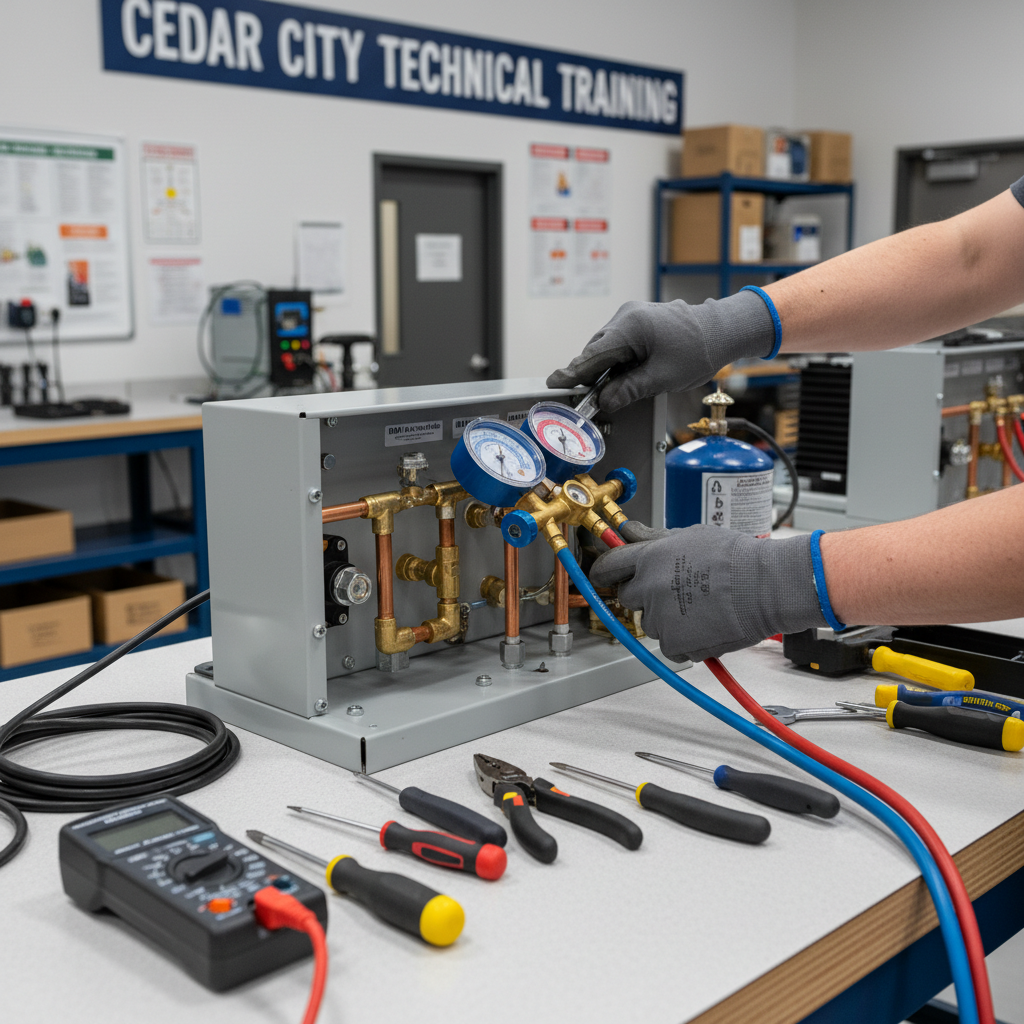
Identifying specific roles that align with your aptitude is the first step toward career stability in this shifting economy. The 2026 landscape in Utah features a robust mix of digital and physical roles that qualify as new-collar jobs. Cybersecurity analysts and computer network architects currently lead the tech sector, as businesses prioritize data protection and network integrity over academic credentials. Similarly, renewable energy technicians are becoming essential as Southern Utah expands its solar and wind infrastructure.
To answer the recurring question of what trades are in demand in Utah, the data points to three critical areas: HVAC, electrical systems, and OSHA-certified construction management. In Cedar City, the surge in industrial and commercial development along the I-15 corridor has transformed these trades. They are no longer just manual labor; they are technical professions requiring fluency in smart building systems and safety compliance. Entry-level certified workers in these high-demand trades frequently see starting wages exceeding $25 per hour because they bring immediate, verifiable competency to the job site.
Role | Key Certification Focus | Average Utah Entry Wage (Certified) |
|---|---|---|
Cybersecurity Analyst | Security+, Network+, or vendor-specific | $28 - $35 / hr |
HVAC Technician | EPA 608, NATE, or smart-system diagnostics | $24 - $30 / hr |
Construction Manager | OSHA-30, CMIT, or project management | $26 - $32 / hr |
Electrical Specialist | Journeyman license or industrial automation | $25 - $32 / hr |
The integration of technology into these fields is what separates modern workers from the previous generation. A computer network architect in Southern Utah might focus on the logistics sector, while an electrician might specialize in EV charging infrastructure or industrial automation. These specializations are most efficiently acquired through career-focused education and certification programs rather than general academic study. This alignment between skill acquisition and local industry needs is a core pillar of about our mission in Cedar City, ensuring that the local workforce is prepared for the high-tech demands of 2026.
The AI Factor: Which Certifications Matter Most in 2026:

By 2026, the distinction between manual labor and technology has largely disappeared because Artificial Intelligence is now a standard tool for operational efficiency. Even in traditional trades like HVAC or electrical work, AI-driven diagnostics and predictive maintenance software are the norms. Consequently, general AI awareness is no longer sufficient; specialized certifications focusing on practical, industrial application are what define the competitive edge in the current market.
The most valuable certifications in 2026 focus on utility rather than theory. Professionals should prioritize credentials in Prompt Engineering for Technical Workflows. This specific skill set teaches workers how to use generative models to troubleshoot complex mechanical systems or draft safety protocols in seconds. Additionally, AI-Driven Project Management certifications are critical for overseeing construction or industrial sites, as they utilize machine learning to optimize supply chains and labor scheduling based on real-time environmental data.
Certification Type | Focus Area | 2026 Workforce Application |
|---|---|---|
Prompt Engineering | Technical Workflow Optimization | Troubleshooting industrial equipment and drafting technical documentation. |
AI Project Management | Resource & Labor Allocation | Predicting material shortages and optimizing crew schedules on-site. |
Responsible AI Ethics | Data Privacy & Governance | Ensuring digital tools are used safely and securely within company networks. |
Our philosophy at about our mission in Cedar City is that learning a trade is only half the battle. We integrate digital tools and responsible AI directly into our career-focused education and certification programs to ensure our graduates are twice as productive as those using legacy methods. This digital competency acts as a "gold collar" bridge, allowing workers to move seamlessly between physical field work and high-tech management roles. If you want to see how these tools apply to your specific career path, contact our admissions team for a detailed walkthrough of our technical curricula.
How to Qualify for New-Collar Jobs Without a Degree
Transitioning into a high-paying role in today’s market requires a tactical approach to skill acquisition rather than a broad academic history. The path to securing new-collar jobs is linear, focusing on verifiable output and local industry alignment.
Identify your target role using the 2026 high-demand list. Start by selecting a role that matches both your aptitude and regional growth patterns. In Southern Utah, this typically means focusing on sectors like industrial automation, renewable energy technology, or cybersecurity.
Choose a certification program that offers practical application. Select career-focused education and certification programs that prioritize hands-on laboratory work over abstract theory. Employers in 2026 prioritize candidates who have already demonstrated proficiency with the specific tools and software used on the job site.
Build a portfolio of projects. Documentation is essential for modern trades and technical roles. For an HVAC technician, this includes photos of complex smart-system installs; for a cybersecurity analyst, it includes logs from successful network audits. These artifacts prove the 70 percent skills-based competency that modern hiring managers require.
Network within the Cedar City and Southern Utah business communities. Local industrial firms often hire through direct relationships with training providers. Engaging with regional business groups helps verify your reputation within the community where you intend to work.
Feature | Traditional Degree Path | New-Collar Certification Path |
|---|---|---|
Primary Validation | Academic Diploma | Specific Industry Certification |
Evidence of Ability | Course Grades | Practical Project Portfolio |
Geographic Focus | General/Global | Localized to Cedar City Demand |
Timeline to Hire | 4+ Years | 3 to 12 Months |
This strategic roadmap ensures that you enter the workforce with the exact specifications local companies need. Supporting this transition is central to about our mission in Cedar City, where we align technical curricula with the immediate needs of Southern Utah employers. In the 2026 economy, the combination of a specific certification and a proven portfolio consistently beats a general degree. To begin mapping your specific transition, you can contact our admissions team for a consultation on current enrollment tracks.
Choosing the Right Training Institute in Southern Utah

Selecting the right institute in Southern Utah requires looking beyond basic accreditation. In 2026, a training program must offer a structured curriculum that mirrors real-world workflows and integrates modern technology, including the digital tools required for new-collar jobs. At Alvin Training, our programs are built specifically to address the labor shortages and technical demands of the Cedar City economy. We prioritize recognized credentials that carry weight with local employers.
The benefit of a specialized institute lies in the human element. Small group learning and direct mentorship ensure that technical hurdles are cleared quickly, preventing the stagnation often found in massive, impersonal online courses. This hands-on environment is central to about our mission in Cedar City, where we focus on producing workers who are ready to lead. By choosing career-focused education and certification programs that emphasize both digital fluency and practical skill, you position yourself at the front of the hiring queue.
Ultimately, education serves as the doorway to professional opportunity, and obtaining the right certification is the key that unlocks it. To explore how our specific tracks align with your career goals, you can contact our admissions team today.
The rise of new-collar jobs proves that your skills and certifications will define your career success by 2026. While traditional education remains valuable, specialized training offers a faster and more direct route to high-growth industries. Navigating this new landscape requires a strategic approach to your professional development. If you want expert help choosing the right path for your future, you can learn more about Alvin Training and how we guide students toward success. We are committed to helping you bridge the gap between where you are and where you want to be.