
Yes, trade school is worth it because it offers a faster path to high-paying careers with significantly lower tuition costs than traditional four-year universities. Students often see a superior early return on investment by entering the workforce sooner and avoiding massive student debt; this provides a multi-year head start on wealth building compared to traditional college graduates.
Many young professionals in Southern Utah face a frustrating reality; they spend years and thousands of dollars on a traditional degree only to enter a job market that lacks security and competitive pay. The rising cost of tuition, coupled with the instability of office-based roles, has many questioning if the four-year path still makes financial sense. At Alvin Training, we believe the data tells a different story for 2026. Choosing a trade is no longer just a secondary option; it is a calculated, high-ROI move for those who prioritize immediate earning potential and recession-proof stability. In this guide, we will break down the exact return on investment for trade certifications versus degrees, explore the massive $400,000 head start vocational students gain, and identify the highest-paying skilled roles specifically available in Cedar City and St. George.
The Bottom Line: Is Trade School Worth the Investment in 2026?
The short answer to the question is trade school worth it in 2026 is a resounding yes. The traditional path of a four year degree has become increasingly difficult to justify as university tuition continues to skyrocket while the skilled labor shortage reaches a critical point. For residents in Southern Utah, particularly those in Cedar City and the surrounding Iron County area, the financial math is clear. Choosing career-focused education and certification programs allows you to enter the workforce in months rather than years, providing a massive head start in earnings and professional growth.
At Alvin Training, we see firsthand how the perception of vocational education has shifted. It is no longer viewed as a secondary option, but as a high tech, high reward career trajectory. Modern trades now integrate digital diagnostics, spatial reasoning, and advanced technical skills that are essential to the regional economy. By training locally, you avoid the heavy debt loads associated with distant universities while gaining the exact credentials that Southern Utah employers are desperate to find. If you are ready to bypass the waiting period and begin earning, you can get started with your certification to secure a position in an industry that values practical expertise over theoretical study.
Crunching the Numbers: Trade Certification ROI vs Four Year Degrees

To truly evaluate if is trade school worth it, one must look at the immediate financial trajectory after graduation. In Utah, a four year degree at a private or out of state university can easily exceed $120,000 when factoring in tuition, fees, and the compounding interest of student loans. In contrast, specialized trade certifications typically range between $15,000 and $33,000. This $90,000 difference represents more than just saved money; it is capital that stays in your pocket rather than being owed to a lender.
Education Path | Average Total Cost | Typical Duration |
|---|---|---|
Private or Out-of-State Degree | $120,000+ | 4 to 5 Years |
Typical Trade Program | $15,000 to $33,000 | 6 to 24 Months |
Alvin Training Programs | Targeted Pricing | 3 to 12 Months |
Data from the Georgetown Center on Education and the Workforce highlights a significant median ROI gap that surprises many. Technical trades often reach a $313,000 lifetime return, surpassing the median return for many generic bachelor’s degrees. This occurs because the trade graduate enters the market with a specialized skill set that is in short supply but high demand. At Alvin Training, our curriculum is built specifically around these high growth sectors. Every program we offer focuses on credentials that translate precisely into local payroll requirements in Iron County and the surrounding region.
When you choose career-focused education and certification programs, you are prioritizing a shorter, more intense training period designed for maximum efficiency. This efficiency is the engine behind the high ROI. Instead of spending years on elective courses that may not be used in the field, students gain rigorous, hands-on experience with the specific tools they will use daily. By minimizing upfront costs and maximizing entry-level wages, the technical path offers a faster route to financial independence than many traditional academic alternatives. To begin building this equity today, you can get started with your certification and join a workforce that rewards tangible skill.
The $400,000 Advantage: Understanding the Three Year Head Start
The true measure of if is trade school worth it often hides in the calendar rather than the tuition bill. When you choose career-focused education and certification programs, you are effectively buying back three years of your professional life. A student at Alvin Training can complete their credentials and enter the Iron County workforce in about twelve months. While a traditional university student is still fulfilling general education requirements in their second, third, and fourth years, the trade professional is already collecting a paycheck and building seniority.
In Southern Utah, entry level wages for certified technicians in precision manufacturing or specialized trades often hover between $48,000 and $55,000. By the time a four year student graduates at age 22 or 23, the trade graduate has already earned roughly $150,000 in gross income. When you add the avoided tuition and the absence of high interest student loan payments, the financial swing is immediate and profound.
Financial Factor (By Age 23) | 4-Year University Path | Trade Certification Path |
|---|---|---|
Total Career Earnings | $0 (Average) | $150,000+ |
Typical Education Debt | ($37,000 to $120,000) | ($0 to $20,000) |
Professional Experience | 0 Years | 3 Years |
This head start compounds rapidly. That initial $150,000, if utilized to secure a mortgage in Cedar City or invested into a retirement account, begins growing years earlier than a peer's savings. By age 30, the net wealth difference between these two paths frequently nears $400,000 when accounting for lost wages, debt interest, and missed investment opportunities. You are not just avoiding debt; you are capturing the most critical years of wealth accumulation. To secure this early advantage and bypass the four year wait, you can get started with your certification today.
Recession Resistance: Why Skilled Trades Stay in Demand During Economic Downturns
Capturing a significant wealth advantage requires a career that remains steady when the national economy stumbles. A primary factor in determining if is trade school worth it involves the inherent recession resistance found in skilled trades. While corporate offices often respond to downturns by eliminating mid-level management and administrative roles, the demand for essential infrastructure is non-negotiable.
Critical systems such as electrical grids, HVAC units, and specialized manufacturing equipment cannot be deferred. If a cooling system fails in a Southern Utah summer or a production line in a Cedar City industrial park stops, the repair is mandatory. This creates a floor for employment that many white-collar professionals lack. At Alvin Training, we focus on these essential skills because they provide a safety net that survives market volatility.
Iron County continues to experience robust growth in residential expansion and tech-manufacturing. This local development means that even if the national macro-environment dips, the local need for technicians to install and maintain physical assets remains constant. By choosing career-focused education and certification programs, you are moving into a sector where your value is tied to tangible, necessary results. To build a career that does not disappear when the market changes, you can get started with your certification and enter a field defined by its durability.
AI Proofing Your Career: The Physical World Advantage in the Age of Automation

Beyond economic stability, the question of is trade school worth it must be viewed through the lens of artificial intelligence. By 2026, Generative AI has transformed office based professions, yet it remains fundamentally limited when it comes to the physical world. Software cannot navigate the cramped, unpredictable crawlspace of a building or perform the delicate, multi sensory troubleshooting required to fix a complex piece of industrial machinery. These roles require spatial reasoning and tactile feedback that digital algorithms simply cannot replicate.
At Alvin Training, we view automation as an ally rather than a threat. Our career-focused education and certification programs prepare students to become tech augmented professionals. Instead of competing against AI, our graduates learn to use digital tools to enhance their output. This might involve using AI driven diagnostic software to identify a circuit failure in seconds or utilizing predictive maintenance algorithms to schedule repairs before a system fails.
This synergy creates a massive competitive advantage. A traditional worker relies solely on manual experience, but an Alvin Training graduate combines physical expertise with data driven efficiency. This dual threat capability makes you indispensable to local employers in Cedar City who need the physical work done but want it executed with modern precision. As long as the world exists in three dimensions, the demand for skilled hands guided by tech literate minds will remain secure. If you want to build a career that software cannot replace, you can get started with your certification to master the intersection of physical skill and digital utility.
Utah Specifics: High Paying Trades in Cedar City and St. George
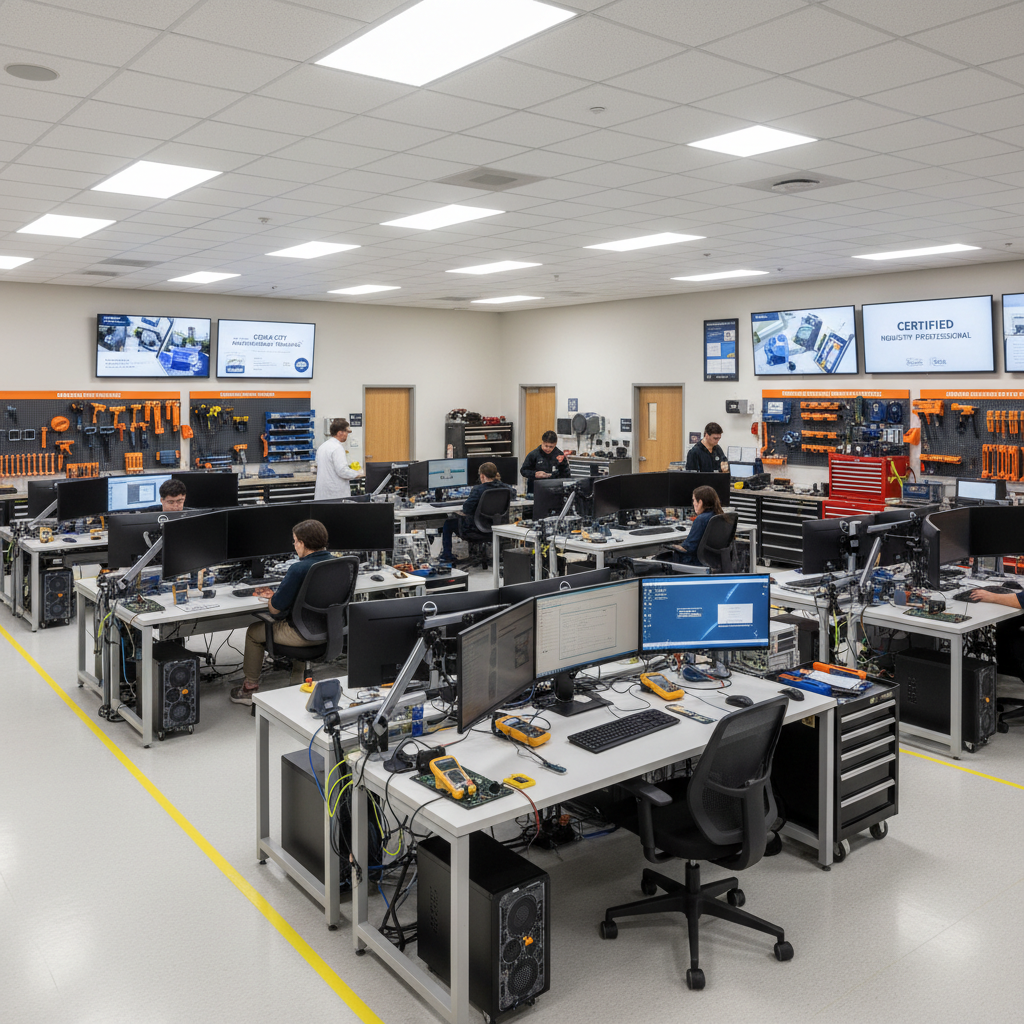
Moving from the theoretical benefits of technology to the local job market reveals why is trade school worth it for residents of Southern Utah. While the Wasatch Front (Salt Lake and Provo-Orem) often sees higher absolute salary figures, the Southern Utah corridor between Cedar City and St. George offers a superior ratio of pay to cost of living. In Cedar City, certified industrial welders and electricians are entering the market with base salaries between $52,000 and $64,000. These figures are driven by the rapid expansion of tech-manufacturing facilities and a residential construction boom that remains steady through 2026.
Local employers in Iron County frequently prioritize recognized credentials over generic four-year degrees because they require immediate, hands-on proficiency. Alvin Training tailors its career-focused education and certification programs to these exact regional demands, ensuring students meet the specific standards of local utility and construction firms.
Trade Role | Entry-Level (So. Utah) | Experienced (So. Utah) | Wasatch Front Benchmark |
|---|---|---|---|
Certified Electrician | $54,000 | $78,000+ | $84,000 |
HVAC Specialist | $50,000 | $72,000+ | $76,000 |
Industrial Welder | $55,000 | $75,000+ | $80,000 |
The demand in Washington and Iron counties for HVAC technicians is particularly acute due to the desert climate and ongoing housing developments. When accounting for the lower overhead of living in Cedar City compared to Salt Lake City, the net take-home pay for a specialized technician here often provides higher discretionary income. To capitalize on these localized opportunities and avoid the saturation of the general job market, you can get started with your certification and position yourself for a high-paying role in the region's most essential sectors.
The Student Debt Trap: Why Vocational Certificates Win on Affordability
The national conversation regarding is trade school worth it often centers on the crushing reality of the student debt trap. By 2026, the average university graduate faces upwards of $37,000 in loans, a figure that often delays major life milestones like homeownership. In contrast, those who complete career-focused education and certification programs typically carry less than $10,000 in debt. At Alvin Training, we frequently see students graduate with zero debt by leveraging employer-sponsored training models prevalent in Southern Utah.
This lower debt threshold provides immediate financial and psychological freedom. While peers are tied to significant monthly interest payments for years, graduates in Cedar City can immediately reinvest their earnings into the local economy or personal savings. Eliminating the burden of high-interest debt allows for a much faster transition into stability and long-term wealth. To secure your financial future without the weight of massive loans, you can get started with your certification and join the ranks of debt-free professionals.
Choosing a career in the trades offers a reliable path toward financial stability and long term security within Southern Utah. While the data highlights a high return on investment, making the right transition requires a focused plan. If you want expert help navigating these vocational choices or finding the best program for your specific goals, we are here to guide you. Please visit our About page to learn more about Alvin Training and our commitment to your professional success.